Tuesday, 2 April 2013

MASSAGE FOR STIFFNESS & TIGHTNESS

Based on the search keywords for this site, I noticed that there is a lot of concerns about stiffness and tightness post TKR.  I have earlier written two related posts on Swelling and Stiffness as well as PT & Massage after TKRSince then, I have done a lot more research and also experimented on various methods to help reduce stiffness and tightness.

In my earlier post on OA still exist after TKR?it was explained why we have stiffness before and after TKR.  Stiffness is due to muscle and ligament damage during the progression of arthritis as described using the analogy of the "tent".  Some studies have shown that if patients have stiffness before surgery, then they are more likely to have stiffness after surgery.  These studies suggests that among the variables evaluated such as age, gender, medical condition, body size etc., the pre-operative stiffness was the only significant predictor of post-operative stiffness.
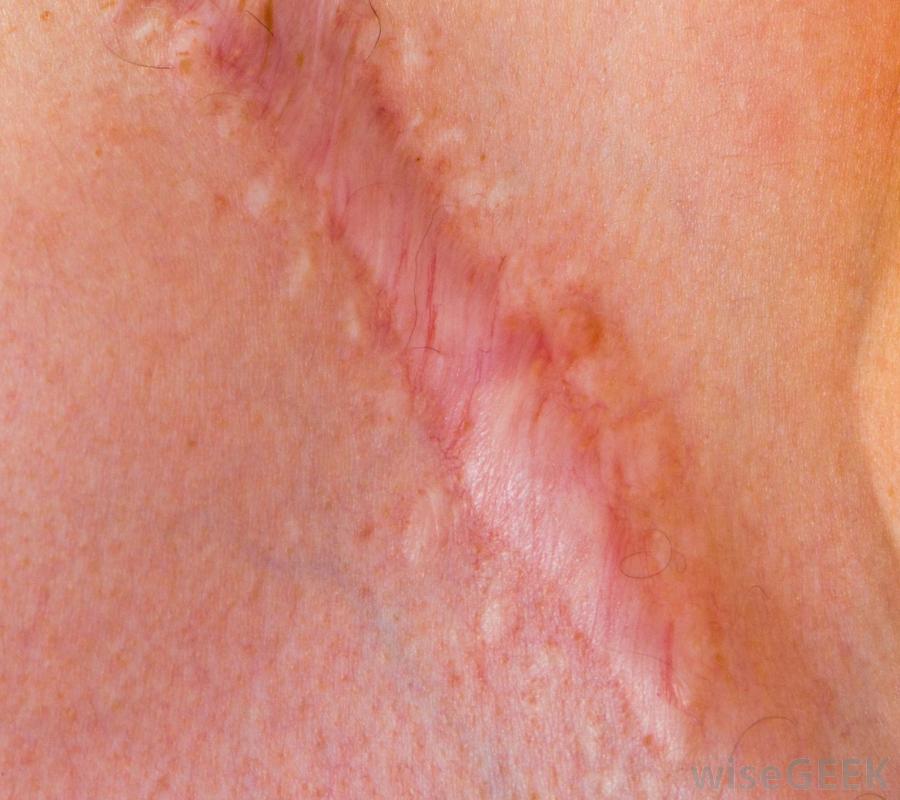
After TKR, most of us will experience a tight band feeling across the knee.  Some people may be fortunate enough to have experienced a reduction or elimination of this feeling after some time.  But for the rest of us, we may still have it after months or years post TKR. This tight band feeling is actually caused by adhesion (scar tissue).  According to Bone Smart, all the structures in the body, muscles, tendons, ligaments, even gut and lungs need to be able to glide over one another smoothly to let our bodies work.  To enable this "glide-ability", the body produces a special viscous fluid approximately the consistency of egg white, which lubricates everything with great efficiency.  When one tissue such as the skin is cut and has to mend, the skin generally makes itself a nice thin little line of fibrous tissue which may fade and disappear over time.  This is called a scar which is primary scarring.  When two bodies of tissues, like muscles, ligaments and surrounding structures are split apart and then nature sticks them back together again, they usually resume normal relations in terms of being close together but with glide-ability.  However, sometimes they fail to restore the needed moistness that allows this and so they get stuck together and the result is adhesion which is secondary scarring.

Adhesion or scar tissue can decrease our range of motion which may give us a feeling of tightness or not being able to move our joints normally.  If the adhesion affects a nerve from moving properly, we can get abnormal sensations like numbness, tingling and pain.  If it affects a muscle, we will have a decrease in strength, a decrease in range of motion and the muscle may feel stuck.  This may result in a feeling of pulling or dragging sensation when we move.  Scar tissue often hurts when touched or during weather changes (which is inexplicable).

Some people seem to make more scar tissues than others. In fact, some people go through a surgery to break scar tissues but this may even cause more scar tissues.  Recently, I read about a woman who had a stomach surgery and subsequently suffered severe scar tissue problems.  Thereafter, she had several surgeries to break down the scar tissues but it did not improve her condition.  She lives in a debilitating state with constant pain and poor posture.  This is an eye opener for me because I did not know that scar tissues could lead to such major problem.

Some doctors will recommend patients to go through a procedure called Manipulation Under Anaesthetic (MUA)  in order to break scar tissues and improve range of motion.  While the patient is asleep and relaxed during MUA, the surgeon forcibly bends the knee until the adhesion give way.  This may result in a backlash of swelling and soreness which at first results in poor flexion but after a period of recovery, the real flexion may surface. However, the result is not guaranteed so most people are hesitant to do it. 

Even after almost two years post TKR, I still have some tight band feeling.  I kept wondering what are other alternatives for breaking down scar tissue and so I did some research.  According to Dr. Barry Triestman, D.C. who specialises in chiropractic care, the reason the scar tissue do not go back to normal is that the body needs to have ideal bio mechanical force put on it and then the tissues will go back to normal.  He uses a patented Active Release Technique which is a soft tissue system to treat scar tissues amongst other things. 

I discovered an interesting video by Knee Pain Guru through the internet showing that one of the ways to break scar tissue is to kneel and walk with our knees so that the force will slowly make the tissues go back to normal.  Of course, this is easier said than done.  How many of us feels comfortable kneeling after TKR?  Not many, I should think. And certainly not me. But as an alternative, I have an improvised method.  I kneel on a thin pad at the edge of my bed and I use the bed to support my upper body just like doing a prayer.  Then I walk with my knees a little back and forth. After that, I just stand on my knees without any support and hold for 20 to 30 seconds.  Oh boy, it does feel painful but it feels good to be able to do this and it gets better with more practice. Already I am finding that I can get down and up from the floor a lot easier.  Now if any of you are game to try the Knee Guru method, please check out the video below.  It might just be the fastest way, not to mention the most painful way to break scar tissue or adhesion.

There are many other non-invasive methods to break scar tissue which you can find in the internet.  There is one method called the Decompression Massage Therapy which I have not tried before but it looks promising to me.  You can check out the the video below which I obtained from the internet. The most practical method for me is deep tissue massage.  Massage therapy has been proven effective to break down scar tissues without any known side effects. Of course, for some of you who have blood or other medical issues, please consult your doctor first. We can seek the services of professionals or we can do it ourselves.  I have started practising deep tissue massage recently on my own and am starting to see improvements in the tightness.  It feels painful and sore initially because we need to apply more pressure preferably using our knuckles on the areas around the knees and on the points of the legs that feels tight and painful.  The good news is that old scar tissues can still respond to deep tissue massage except that it might take a little longer.  If you have just gone through a TKR, it is advisable to wait at least three months or longer until the wound is totally healed. You can check out the video below which I obtained from the internet to see how deep tissue massage can be done.  This video shows a deep tissue massage for an ankle surgery but the routine can be the same for TKR.

According to Bone Smart, a therapist described her technique to reduce scar tissues by applying pressure to the scar with fingertips, hands next to each other like when you are playing a piano and the scar is where the keys are.  Then pull and stretch the scar gently in as many opposite directions as possible to break up all the collagen fibre adhesion.  Eventually work in one specific line of force (only stretching the tissue in one way) to align all the collagen fibres in one direction instead of a chaotic "mesh-like" pattern they can be in when we started.  We need to keep doing this on a regular basis.

 
I realise that to use our fingers to massage can be very tiring so I discovered these cheap little handy plastic massager  (see picture on the left) which comes in all shapes, colour and sizes.  Do not underestimate them as they are very effective and handy to carry around.  Now all we need to do is to apply some massage or baby oil on our legs and then with some pressure just glide the massager all over the thighs, knees, calfs and down to the ankles.  We can also use it to apply pressure on the points of knees where it feels tight.  I use a combination of my fingers, knuckles and the handy plastic massager.


Its amazing what massage can do for our body. I have been able to eliminate the tension headaches at the back of my head while sleeping in the past just by massaging my shoulder, neck and head using my fingers and knuckles while watching television every night.  So I actually kill two birds with one stone.  If I am unable to sleep, I will use my fingers to massage my eyebrows, the temple of my face right up to the back of my ears and it works for me all the time.  Occasionally, I will treat myself to a  full body massage by a professional massage therapist which is so therapeutic. 

Massage therapy improves blood circulation and lymphatic fluid throughout the body, allowing for increased oxygenation of the body's tissues and organs and reduction of swelling and stiffness.  Additionally, the simple fact that human touch, something that we all need and benefit from, is involved in massage therapy and accounts for much of its physical and mental healing qualities. 


My self-massage technique


Wednesday, 6 March 2013

CODEPENDENCY

During my early recovery from sleeping pills addiction, I learnt from a friend who is a recovering codependent that most addicts and family members of addicts are codependents.  Since then, I have read a book on codependency, done some research on it and also have been more observant of myself and others.  Strangely, I discovered that most people including myself do exhibit a certain degree of codependency without realising it.  According to the experts, if we have about 5 to 10% of codependency symptoms, we are still considered normal but a little bit of therapy may make us heal and feel happier.  Beyond that, we can consider ourselves codependent and really need help in order to recover.  Otherwise, it may ultimately lead to self-destruction. 

A healthy relationship is based on interdependence.  It is about forming connections with other people. We give and take.  We set boundaries.  We show our care and concern for others without neglecting our own needs. We are able to let go and have fun.  Whereas in a codependent relationship, it is a one sided relationship.  Codependents usually put aside their own needs in order to meet the needs of another person. They believe that this is what a 'good' spouse, 'good' parent, 'good' children, 'good' friend or 'good' employee/employer ought to do.  This is just not true.  Every situation is different and defining what is and isn't our responsibility can help us make better choices.


Break the chain of codependency
 

Codependency is a dysfunction that causes us to lose ourselves in relationships.  We ignore our feelings, needs and problems while obsessing on the feelings, needs, and problems of others.  We possess an exaggerated sense of responsibility for others, and struggle with maintaining healthy boundaries.  Thus, we experience relationships as stressful, and often suffer from anxiety, depression, guilt and resentment.


Codependents often suffers from feelings of low self-worth or self-esteem but we try to mask our feelings by adopting a care taking role of others, fixing other people's problems, joking/wisecracking/clowning around or pleasing other people so that we appear to have a good image on the outside.  These actions are actually giving us a sense of importance, relieving loneliness, and/or avoiding working on our own issues and needs. It has been said that "When a codependent dies, someone else's life flashes before their eyes!". 

Here are some examples of codependency behaviours which we can find even among family members or  friends:-

1.  Mothers or wives of addicts who can't stop giving money to the addicts to buy their supply because
     they felt  pity for the addicts and blamed themselves for the addicts' problems.  They do not realise that  
     they are not helping but are enabling the addicts instead.

2.  Men or women who spends a great deal of their lives taking care of their aged and sick parent  
     without having a life of their own and neglecting their own needs.  When the parent dies, they feel lost
     and have no sense of purpose anymore.  They are unable to cope with the break of the routine and
     structure. 

3.  Wives who manipulate their control on their husbands and children by attending to all their needs so
     much so that the entire family becomes totally dependent on them.  So without them, the whole family will
     crumble.

4.  Women who are unable to let go of abusive relationships because they fear being alone without anyone
      to take care of.

If you are wondering whether you are codependent, see whether you can relate to the following list of most common symptoms of codependency:-
  • Putting other people's needs before our own.
  • Feeling responsible for other people's behaviours and feelings.
  • Having low self-esteem but feel good when having done something for others.
  • Having problem saying 'No' to other people because of the tendency towards people-pleasing.
  • Afraid of being rejected by others or hurting other people's feelings.
  • Feels resentment towards people who wont let us help them.
  • Needs to be 'needed' to have relationship with people.
  • Enables the person with the problem to keep going down the wrong path and denies to the person that he/she has a problem.
  • Withdraws from others and acts like we don't care what others have to say.
  • Doesn't realise that we have a problem and thinks that we are helping the troubled person when we are really not.
  • Try to control events and people through manipulation.
  • Unable to let go even in an abusive relationship.
  • Unable to express feelings and afraid of intimacy

In the later stages of codependency, codependents may feel lethargic or depressed, become withdrawn and isolated, seek alternatives to living by pursuing other 'escape' activities, experience a complete loss of daily routine and structure or begin to have suicidal thoughts.  Examples of 'escape' activities are when people generally feel unhappy, bored or anxious unless they are playing video games, gambling, using drugs or alcohol, shopping, eating, pursuing a relationship, looking for sexual gratification, 'fixing' other people's lives and problems and even escaping into religion and 'converting' others to their beliefs.  Looking at the reality of the way we live our lives can help us determine if our lives are beginning to be unmanageble due to codependence.

Just like addiction, codependency is a disease as there is no cure for it.  So is recovery possible?  Absolutely.  Here are some of the steps for treatment and prevention:-
  • Admit that we have a problem.
  • Understand that we did not cause the other person's problems.  We can't control the other person and we can't cure or save the person.
  • Do not make excuse for ourself or others for the person.  Accept that the person has a real problem and needs help.
  • Join a support group for codependents such as Al-Anon or Codependent Anonymous (CODA).  It is a spiritual (not religious) program and can work even if you are an atheist.  You will not be persuaded to give up your religious/spiritual or atheistic beliefs.  It is merely a method by which you learn to change your codependent behavior.
  • Try as hard as we can to stop being a codependent for this person.  The more we refrain, the closer we will be to helping our self and the other.  Your group support and Higher Power can help you with this.
  • Seek therapy as codependency may be rooted in childhood.  Therapy can also help to identify the underlying cause of codependency.
  • Be responsible for ourself and others in the family to live a better life and make sure that we are healthy and happy.
  • Spend time on more productive and meaningful things for ourself as well as the community.

Recovery requires conscious effort to change.  We need to be honest with ourselves.  We need the help and experience of others who are in recovery.  We need a good and relevant therapist to help us see the light.  We need to accept our powerlessness over people and events. We need friends who are open and honest with us and we need to be open to their feedback. Very often, a part of being codependent is a resistance to being able to have fun and play.  So as part of recovery, we need to learn how to let go and have fun. Ultimately, we must have the courage to change.  We all deserve to find peace and happiness.


"Recovery is learning to function in relationships." -- Melody Beattie


There is a free local support group called Co-dependent Anonymous (CODA) Malaysia.  For more information, please call Renu at 012-6839544 or check out their website at  http://codamalaysia.wordpress.com


Monday, 4 March 2013

STRYKER HIP REPLACEMENT COMPLICATIONS


Here's another interesting post contributed by Drugwatch.

Stryker Hip Replacement Complications

Around 450,000 hip replacement surgeries are done every year, giving people relief from pain and allowing them to once again participate in everyday activities.
Stryker Orthopaedics is one of the leading manufacturers of hip implants, which are often required as a result of osteoarthritis, arthritis, trauma, obesity, bone death or other hip conditions.
Two of Stryker's popular hip implants, the Rejuvenate and the ABG II, were designed to be long-lasting and provide a custom fit for patients. Unfortunately, many patients instead required painful and expensive revision surgeries to replace the implants.
Stryker’s implants can lead to complications like metal poisoning, bone tissue death and chronic pain. In July 2012, the manufacturer recalled the two hip implants.
Serious Complications
The unique design of Stryker's Rejuvenate and ABG II gives surgeons freedom to customize implants for individual patients using several neck and stem components. The neck components are made of chromium and cobalt, and the stems are coated with titanium. The necks and stems meet at a metal-on-metal junction, which can release metallic debris into the body during normal movement.
Metallic debris can affect the tissue around the implant, turning it a grey color as the tissue becomes oxygen-starved and begins to die. If patients have metal sensitivity, this can be particularly dangerous, leading to metal poisoning. Metal ions in the blood can also cause emotional imbalance, severe headaches, and cognitive and nervous system problems.
Other complications resulting from metal debris can include:
·         Formation of cysts or pseudotumors
·         Implant failure
·         Implant loosening
·         Deterioration of bone around the implant
·         Osteolysis (bone lost around implant that leads to inflammation)
·         Severe joint pain
When patients experience these or other complications from implants, they may need revision surgery to remove the defective implants.
Safety Alert and Recall
More than 20,000 people received the Rejuvenate or ABG II before Stryker issued a warning about the implants in April 2012. A few months later, Stryker recalled the two hip systems.
The April warning, classified as an "Urgent Safety Alert," stated that the implants were associated with "fretting and/or corrosion at or about the modular neck junction," that can "lead to increased metal ion generation in the surrounding joint space." It was sent to hospital risk managers and surgeons.
Meanwhile, dozens of implant recipients had reported adverse events, like metal toxicity, to the Food and Drug Administration (FDA).
Finally, on July 6, 2012, Stryker recalled the Rejuvenate and ABG II, and stopped global production and marketing of the implants. Stryker says that patients who have received these devices and are suffering from side effects should seek medical attention. Medical professionals can provide evaluations using X-rays, MRIs and blood tests to determine if metal ion levels are too high.
There are more than 50 Stryker lawsuits pending in New Jersey state court, and hundreds more claimants are expected to step forward in the coming months.

Alanna Ritchie is a content writer for Drugwatch.com, specializing in news about prescription drugs, medical devices and consumer safety. Feel free to follow us on Twitter.

Tuesday, 29 January 2013

EXERCISE POST TKR


Very often, we have been told that we should not do any exercises that involves high impact activities such as jogging, running, aerobics, football, basketball etc. after TKR.  This is to avoid early failure of the knee replacements which may lead to a revision.

When I started to do my high intensive exercises which involves jumping jack as cardio, I was worried about my implants.  But I wanted to do it because its really effective for cardio plus it helped me to lose some pounds before.  So I tried and initially, it felt a little unnatural but after a while, I got the hang of it.  However, the whole time I was doing it, I was worried about my implants.  When I shared about this experience in my blog, some of my readers raised their concerns about me doing the jumping jack because they were advised by their OS not to do such activities in order to prevent loosening of the implants.  This confirmed my fears and so I stopped doing it. 

On the other hand, some of my forum members have said that they could not care less about the implication.  The reason they gave is that after being unable to do the things they loved for so long, TKR has enabled them to resume their love for sports and if they ended up needing a revision, so be it.  Now that's a whole different attitude which is really brave and I must admit that I tend to be more cowardly in this area.

So is high impact activities safe for implants or not?  There is an article in Arthritis Today titled Knee Replacements Not Harmed by Most Sports.  It said that a new study suggests that high-impact activities don't contribute to the early failure of knee implants.  This study suggests that those long-held assumptions could be wrong.  The study compared two groups of people with knee implants over a period of 7.5 years.  The sport group that ignored doctors' advice to avoid high-impact activities did not show any significant differences in wear or tear mechanical failure compared to the control group who followed doctors' advice.  Its even more surprising that the control group had a higher rate of loosening, wear, fracture and overall mechanical implant failure than the sport group. 

So why aren't high impact sports affecting the implant after 7.5 years?  The researches felt that it could be due in part to better-made prosthesis that are thicker and stronger than ones produced years ago.  They also think that patients practising these kinds of sports were probably doing it before the prosthetics so they have experience and are probably more able to protect the prosthesis by being more careful and paying attention to their knees.  However, there are concerns that the length of the study is only medium term and what is required is to show a longer term of 15 to 20 years. But the researchers said that intermediate follow-up lends credence to the idea that more activity is ok for implants.  They also said that its worthwhile reporting even though it doesn't conclusively prove they are safe.  So patients have to decide whether its worth the minimal risk in order for them to lead an active lifestyle.

Another inspiration is Dick Beardsley who is a recovering addict, motivational speaker and marathon runner.  He had battled back surgery and 2 TKRs due to injury and is still running.  You can check out his blog to read about his experience with TKR and running. 

So where does all this information lead us to? I think the answer really depends on the individual.  Fortunately for me, I am not into high impact activities.  I enjoy walking, cycling, stretching and strength training.  I have also recently added dancing as an exercise through a home video.  I can conclusively say that if I accidentally ran after a thief who snatched my bag or if I suddenly decided to jog lightly down the hill during my walks, I would not worry about my implants anymore!


Tuesday, 8 January 2013

ARTHRITIS

The word "arthritis" comes from the Greek arthron meaning "joint" and the Latin itis means "inflammation".  So arthritis literally means joint inflammation.  There are so many types of arthritis but the most common is Osteoarthritis and Rheumatoid Arthritis.
 
Recently, I was tidying up my home library and I found two old books on Arthritis which I had completely forgotten about.  One was written by Stephen Terrass and the other by Patrick Holford.  I read the books again and found a lot of interesting information.  According to Stephen Terrass, it is believed that arthritis has been around for some time.  Scientific literature tells us that the fossil of a large, swimming reptile called the platycarpus, which lived almost 100 million years ago, showed evidence of arthritis.  Signs have also been detected in the bones of cavemen, and in the spines of several 8,000 year old Egyptian mummies.  And in Roman times, it was considered such a burden that the emperor Diocletian exempted citizens with severe arthritis from taxes.  Wouldn't it be nice if this is applicable today? Because I think most of us would be eligible for tax exemption!

It was also said that OA being the most prevalent form of arthritis affects three out of four people over the age of 50.  A fatalist would say that arthritis is almost a certainty - like death and taxes.  However, the author points out that this is far from the truth because it can be prevented. I agree with that because so much of research have been carried out today and most of us have become more educated and conscious of our health.  Apart from genetics, research has pointed out that our diet and lifestyle can cause arthritis.  Therefore, we hold much of the ability to eliminate such problems.  Of course, medicines and treatments are important but the one sure thing to cure arthritis is to prevent it in the first place.

Rheumatoid Arthritis

One of the most common arthritis is Rheumatoid Arthritis (RA).  RA is a form of inflammatory arthritis and an autoimmune disease that causes the body to attack its own soft tissues and joints. As a result of the attack, fluid builds up in the joints, causing pain in the joints and inflammation that is systemic - meaning that it can occur throughout the body. RA most commonly affects the joints of the hands and feet but it can also cause elbow, shoulder and neck problems. Joint swelling is often more pronounced in RA.
 
The cause of RA is still unknown but most scientists agree that a combination of genetic and environmental factors is responsible. Researchers have identified genetic markers that cause a tenfold greater probability of developing RA. There are nearly three times as many women as men with the disease. In women, RA most commonly begins between the age of 30 and 60. It often occurs later in life for men.
 
Juvenile Rheumatoid Arthritis (JRA) is another auto-immune condition but it tends to affect children and adolescents. There is a broad spectrum of JRA with some patients having just one joint involved and others having many problems. The most commonly involved joint is the knee. The only cure for JRA is joint replacement. I have come across two people who have JRA with severe joint damage at the knees. One of them got both of her knees replaced at age 28 while the other did a bilateral TKR at age 31. While TKR helped them to gain their life back, their biggest challenge was finding an OS who was willing to do TKR for them at that young age.

Osteoarthritis

Osteoarthritis (OA) is the most common type of arthritis.  In my earlier post on OA, I mentioned that it is commonly thought that OA is caused by a wear and tear condition due to ageing.  However, studies have now shown that OA may be caused by other factors such as inflammation.
 
I came across Dr Robert H. Shmerling's blog where he said that he heard about a joke when he first started studying arthritis  -  A 90 year old man sees his doctor complaining of pain in his knee.  His doctor asks him, "What do you expect? You are 90 years old".  The old man replies, "Yes, but my other knee is also 90 and it feels fine".  Isn't this hilarious?  And I think it proves a point.
 
It was also said that studies conducted on runners in 1998 over a nine-year period showed that members of a running club ages 50 and older had no higher incidence of OA than an otherwise similar group of non-runners. 
 
What about people who suffers from arthritis of the hands?  It was said that when OA affects the hands, this is the best argument against a direct connection between use (or overuse) and OA. Finger joints with OA look very similar to the knees with OA, yet not everyone bears weight on the hands. If 90% of people are right handed and if OA was purely use-related, there ought to be a lot more right hand arthritis compared to left hand arthritis but this is simply not the case. 

So what causes OA if its not the wearing out of joints?  Apparently, OA may not be caused by one single factor.  It can be caused by a combination of factors such as advanced age, obesity, genetics or injury. However, I find it hard to understand why OA is affecting more and more younger people.  Some of them are not even obese, did not experience any injury, are physically active and healthy.

According to Dr. G's blog, he said that he started to experience arthritis symptoms at 46 years of age.  He did not have any of the traditional risk factors like obesity, joint over-use or sport injuries so he started to think why he is getting OA so early in life.  He found through his own research that OA is not a disease of ageing or degenerative disease.  He said that more and more research over the past 10 years is showing that OA starts out very similar to other chronic diseases like heart disease, stroke, diabetes etc.  Ageing is not the cause.  It is chronic inflammation.  It is the bad type of inflammation which is also responsible for a lot of other diseases.

I have much earlier shared a link to a study by Stanford University School of Harvard in my post on OA still exists after TKR?  The study suggests that OA results from inflammatory process, not just wear and tear.  It was observed in the study that there were increased numbers of certain specialized inflammatory proteins early in the progress of OA, before it becomes symptomatic which suggested that inflammation might be a driver, rather than a secondary consequence of the disease.  Right now, they don't have anything to offer OA patients to treat their underlying disease but it would be incredible to find a way to slow it down.

All the above information suggests that there is a paradigm change in the underlying disease of OA.  Perhaps this explains why it is affecting more and more younger people. The more I researched, the more it is pointing to this direction.  In my earlier post on "pH Balance and Arthritis", it was said that an acidic body may lead to inflammatory diseases.  I wonder whether all these findings are connected.  Anyhow, I am certainly hoping that the experts find a solution soon in order to prevent or slow down OA.  Until then, lets be more proactive by taking a good look at our diet and lifestyle and start making necessary changes.  Even if it can't reverse our arthritis condition, maybe it can help to prevent more damage.


Arthritis


Saturday, 8 December 2012

REFLECTIONS OF 2012


Yea, tis the season to be jolly!   Its the best time to go to the malls and snap, snap, snap. Look at the colorful pictures that my daughter, May helped to snap.  Christmas spirit is everywhere and its the happy time.

This year has flown by so quickly for me.  It has been 20 months since I had my bilateral TKR and 7 months since I started this blog.  One thing's for sure, I haven't counted time as much as before.  During my early recovery, I have always wondered when will all this be over.  I used to be envious of people who have been out of TKR for years but look at me now, in another few months, I will be hitting my two year mark. So it just goes to show that everyone will get there, its a matter of time.

About two months ago, I experienced pain along the side of my right knee and down the leg.  I felt pain when I put pressure on my knee and when walking up the stairs.  Naturally, I was worried and started to think about what I had done to have caused this.  The first thing that came to my mind was whether there was anything wrong with the implant. Then I started to notice a small lump at the front of my right knee.  So I consulted my OS and it was a relief to hear that the pain was caused by a pulled ligament and nothing serious.  With one week of anti-inflammatory medicine, the pain was gone.  He suspected that the lump is probably a blood clot and nothing to worry about.  Its a relief that the lump has gotten a lot smaller and not so noticeable now so I'm not worried about it anymore. 

About two weeks ago, I spoke to a friend's friend on the telephone.  She had TKR on one knee last April which was thirteen days earlier than mine and it was at the same hospital as mine too.  She complained that even though she does not have pain anymore in the knee but she still feels the numbness around the surgical scar.  I told her that I still have that too and that its normal because one nerve at the front of the knee had to be cut in order to gain access.  I explained to her that its very hard for the OS to join back the nerve therefore, the numbness may end up being permanent.  Then I asked her when she plan to do the other knee and she said that she might not do it anymore.  I asked her why and she said that her TKR knee doesn't feel natural with the numbness.  Then I asked her whether her knee felt natural before TKR and she said obviously not.  In the end, she admitted that she was scared of going back to do the other knee and that she was envious of me having done both of my knees at the same time.  You see, this is a classic example of some people who ended up with one good knee because the fear of going back to do the other is too great.  Anyway, I gave her some encouragement and hopefully, she will gain the courage to do the other knee.

Some experienced TKRers have said that they do forget that they have TKR knees.  I felt encouraged listening to such feed backs but until today, I have not reached there yet.  At times, I do forget especially when I am focused on doing something.  But at other times, I am reminded of them with the clunking sensation (caused by friction between metal and plastic).  Maybe I tend to be quite observant of my knees too. On top of that, I still have the stiffness, tightness and numbness at the surgical scar.  My range of motion is at 120 degrees which is the same as before TKR.  However, the good news is that I feel great.  I don't have pain in my knees and I can sleep well. I can walk very fast.  I can run up and down the stairs.  I can do all my exercise movements.  I can go shopping for quite a long period.  And I can go for holiday trips.  In other words, I have my life back!

To be honest, I did not know much about OA and TKR before my surgery than I do now.  I used to think that after TKR, everything would be back to normal.  Its obviously not true but maybe so for a  small minority of people.  It all depends on how much damage have been caused by OA. With the knowledge that I have gained, I know that OA has caused permanent damage to my body.  My range of motion and stiffness have been greatly affected by the damage of muscles and ligaments.  The tightness and numbness are caused by the TKR surgery and they are very likely to become permanent.  But the most important factor is that TKR has removed the pain in my knees and gave me my life back.  So all the other sensations that I am still feeling is nothing compared to what I have now.  They do not impair my overall function.  I can only blame myself for my ignorance about OA and for delaying the surgery.  However, looking at the bright side, this experience has given me a passion for sharing my experience, doing research on arthritis and TKR and writing this blog in order to create awareness and help to inspire those who are battling the same problems. 
Some of you may have noticed that I wrote about the importance of pH balance and alkaline diets in my earlier posts. I have been consuming more alkaline water and food on a daily basis.  Actually, I have been drinking 2 to 3 litres of alkaline water for more than a year now and it includes calcium ion powder, lemon and baking soda.  However, I realised that I don't consume enough of greens and fruits.  But now, I am consuming tons of it through my green smoothies everyday.  I have been doing this for a few months now and  I noticed that my immune system is better and my acid reflux problem has improved.  I do believe that an acidic body causes lots of medical problems including inflammatory diseases such as arthritis.    And I cannot take for granted that after my bilateral TKR, other parts of my body would not be affected.  In fact, some parts have already been mildly affected. Thus, something has to change.  I am hoping that by consuming more alkaline water and green smoothies, adopting a healthier eating habit and regular exercise may help to reverse or prevent more damage due to arthritis.  Overall, I am happy with my progress and feel blessed with this medical miracle of TKR.  And I certainly hope that I will continue to be inspired to write more posts in 2013.

To wrap up this year, here's wishing everyone "Merry Christmas and Happy New Year!  May the new year bring you lots of good luck, good health and the courage to change the things that you can.


With daughter, May

Friday, 16 November 2012

WHEN IS THE RIGHT TIME TO DO TKR?

This is a very common question being asked in TKR forums.  In fact, I noticed that some people joined such forums for months or years before they even schedule their TKR surgeries.  I believe that these people know  they have a problem but they wish to find out in detail before they make a decision.  Well, it's good to learn as much as possible in order to be more prepared.  However, if learning more is going to put you off, then it may not be a wise thing to do.  In such instance, I would suggest that you just learn enough to help you make a decision and make necessary preparations before the surgery.  After all, you have plenty of time to learn more during recovery which is quite a long process.
 
In my case, I have to admit that I did not know much about TKR except way after my surgery.  I was in denial for some time but I knew that I had hit rock bottom when the pain became unmanageable.  Then I went running to my OS to fix the problem.  I was told that I needed a bilateral TKR because I was already bone on bone in both knees and it had resulted in joint damage.  Without any hesitation, I immediately scheduled a surgery which was only about  a few weeks away.  At that time, I was helping my daughter to organise a charity event so I fixed the date right after the completion of the event.  I'm glad I did that as I did not have to go through the anxiety of waiting.  Though I had to move around in great pain but it was the excitement of the preparations and adrenalin from the success of the event that kept me motivated.  To be honest, I could not wait to get over with the surgery as I have endured enough.  It was only early this year that I started to join TKR forums and learnt so much from fellow TKRers. 

It's quite common to see some people who are happy to have finally scheduled their TKR surgeries but subsequently, begin to question whether they have made the right decision.  Most of the time it's because they suddenly experienced less pain in their knees and they begin to feel that their condition is not as bad as what other people are experiencing.  Actually, this is a sign of nerves and its perfectly normal.  Its also quite common to see some people who keeps questioning whether they are the right candidates for TKR because their pain is not as severe as what they see others experiencing.  Since then, I have learnt that  sometimes an x-ray can show very bad damage but the person does not experience much pain.  On the other hand, there are cases where the x-ray showed little damage but the person has extreme pain.  This is quite puzzling and  even some medical professionals find it hard to explain to their patients.  However, these people do admit that while they do not have severe pain but they walked with a limp, have bad posture,  experience pain when climbing up and down stairs, have restrictions in carrying out certain activities,  have limited range of motion etc. So the question remains when is the right time to do TKR?


I know its hard to pin point a certain time.  But some people have said that they knew its time when:-

  1. they felt that enough is enough
  2. they are unable to do the things they love
  3. nothing works anymore
  4. there is no quality in their life
  5. they are merely existing and enduring life

Well, here's something that can help you to determine whether its time for you to do a TKR.  Just answer the following questions honestly:- 

  1. How long can you walk and stand without pain and stiffness?
  2. Are you limping when you walk?
  3. Do you have a bad posture with aches and pain?
  4. Are you able to climb up and down stairs normally without pain?
  5. Are you able to do daily chores without restriction and pain?
  6. Are you able to go shopping and holiday trips?
  7. Are you able to do any exercise or play any sports?
  8. Is the knee pain affecting your sleep?
  9. Are you having bow legs or knock knees?

If you score poorly on the above questions, then the answer is obvious.  We do not have to just endure life.  We are supposed to have a better quality of life.  TKR is a medical miracle that allows us to gain back our life and it is one of the most highly successful surgery.  In fact, many people including myself waited too long to do TKR and as a result, suffered more damage from OA (refer post on OA still exist after TKR?).  And after finally having gone through TKR and enjoying an  active lifestyle with pain free knees, this is what most of us said  "WHY DID I WAIT SO LONG?"